
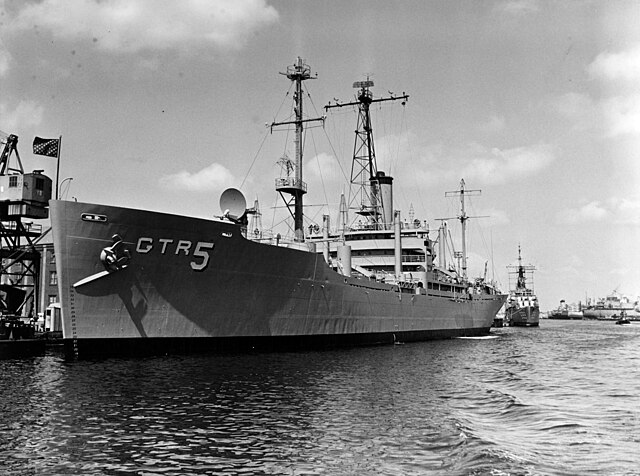
For decades, the 1967 attack on the USS Liberty has been cited as proof that Israel deliberately assaulted a United States naval vessel. The claim continues to circulate in political rhetoric and online discourse. A careful review of the historical record, however, points to a different conclusion grounded in documented investigations and declassified evidence.
A Wartime Tragedy
On June 8, 1967, during the Six-Day War, the USS Liberty was operating in international waters north of the Sinai Peninsula. As Israel fought against surrounding Arab states, Israeli air and naval forces attacked the ship using cannon fire, rockets, napalm, and torpedoes.
Thirty four American crew members were killed, and approximately 170 were wounded.
Once Israeli commanders realized the vessel was American, the attack was halted. Israel immediately notified United States officials, offered medical assistance, issued a formal apology, and later paid compensation to the families of the dead and wounded, as well as for damage to the ship.
Findings of Official Investigations
Multiple United States government investigations examined whether the attack was intentional. These inquiries were conducted by the Navy, the CIA, the NSA, the Joint Chiefs of Staff, and Congress. All concluded that there was no evidence Israel knowingly attacked a ship it recognized as American.
Israeli investigations reached the same conclusion. Three separate Israeli inquiries independently determined the attack was unintentional.
According to these findings, the Israel Defense Forces believed the USS Liberty was a hostile vessel based on erroneous battlefield reports and misidentification. Israeli pilots failed to correctly identify the ship during the attack but called it off once they understood it was American.
The CIA assessed that the Liberty had been mistaken for the Egyptian transport ship El Quseir. Although the Liberty was significantly larger, the CIA noted that similarities in hull design, mast placement, and overall configuration could plausibly mislead pilots operating under combat conditions.
Declassified Evidence
Declassified communications released by the National Security Agency captured Israeli pilots expressing confusion after the strike and discussing the ship as an Egyptian vessel. These recordings reinforced conclusions of misidentification rather than intent.
Israel accepted responsibility, issued formal apologies, and paid compensation over several years. Payments included approximately 3.32 million dollars to families of the deceased, 3.57 million dollars for medical costs and lost wages, and an additional 6 million dollars in 1980 for damage to the ship.
Claims of Motive Examined
Despite the investigations, accusations of a deliberate attack persist. Several theories have been proposed, but none are supported by evidence.
One claim suggested Israel intended to sink the Liberty and blame Egypt. Israel never attempted to do so and instead immediately accepted responsibility. Another theory alleged Israel sought to conceal plans to seize the Golan Heights. United States officials had already been informed of Israel’s intentions regarding the Golan prior to the incident.
No theory has articulated a credible motive supported by documentation or corroborated intelligence.
Friendly Fire in Wartime Context
Friendly fire incidents are a documented reality of war. During the Gulf War, for example, nine of the 24 British soldiers killed died as a result of mistaken United States attacks, despite survivors stating friendly markings were visible, as reported by the New York Times.
The USS Liberty incident reflects this broader wartime pattern of miscommunication, faulty intelligence, and human error under pressure.
Ongoing Controversy
Some of the most prominent proponents of the deliberate attack claim include former crew member James Ennes, whose later political activism has raised questions about neutrality. In contrast, Captain and Judge A. Jay Cristol, a leading historian of the incident, concluded that Israeli leadership viewed American goodwill as a supreme political interest during the war, making a deliberate attack implausible.
Conclusion
The USS Liberty incident remains a deeply painful episode in the history of United States Israel relations. It was a tragic loss of life that deserves remembrance and respect.
The weight of the evidence points to a tragic case of mistaken identity during a fast moving regional war. Decades of investigations, declassified intelligence, and official findings have produced no credible motive, no documented proof, and no corroborated intelligence supporting claims of a deliberate Israeli attack.
Resources
https://www.sixdaywar.org/uss-liberty/
https://web.archive.org/web/20150526054238/https://www.nytimes.com/1992/05/11/world/9-deaths-in-gulf-british-ask-why.html
https://irp.fas.org/nsa/liberty.html
https://libertyincident.com/docs/HouseInvestigation1971.pdf
https://libertyincident.com/docs/SenateInvestigation.pdf
https://history.state.gov/historicaldocuments/frus1964-68v19/d337
https://libertyincident.com/docs/CourtOfInquiry.pdf
https://libertyincident.com/USNcourt.html
https://history.state.gov/historicaldocuments/frus1964-68v19/d267
https://libertyincident.com/clifford.html
https://www.history.navy.mil/content/dam/nhhc/about-us/leadership/hgram_pdfs/H-Gram_007.pdf
https://history.state.gov/historicaldocuments/frus1964-68v19/d317