
The Lie
- Americans aren’t allowed to criticize Israel because doing so is considered antisemitic and illegal.
The Truth
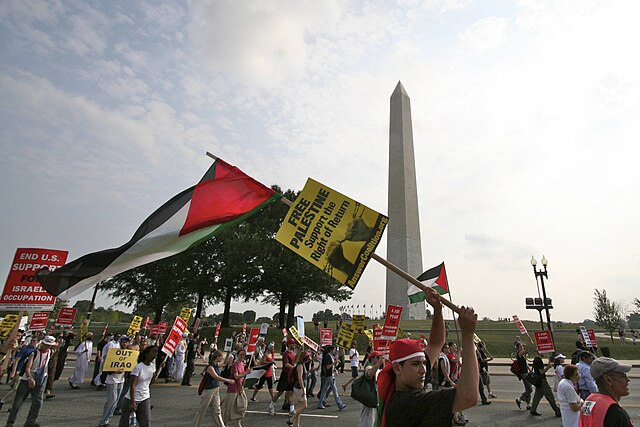
- Criticizing Israel and its leaders is legal, protected by the First Amendment, and increasingly common in the United States. No one in the U.S. has been arrested, charged, or convicted simply for criticizing Israel.
Background
- On December 16, 2025, Florida Republican gubernatorial candidate James Fishback released an ad claiming that criticizing Israel—such as calling its actions “genocide” or labeling Israeli Prime Minister Benjamin Netanyahu a war criminal—”can be convicted as antisemitism.” (X)
- Fishback stated that criticism of Israel should be constitutionally protected and said that, as governor, he would ensure people are free to express those views.
Truth Explained:
- Antisemitism is not a crime under U.S. law. Violent acts or threats against Jews can be prosecuted under existing hate-crime laws, which apply to all protected groups.
- Criticism of Israel and Israeli officials is protected speech. There is no record of anyone in the United States being charged or convicted simply for criticizing Israel.
- Criticism of Israel has become increasingly mainstream, while defending Israeli government policy—especially continued U.S. military aid—has become controversial. (Arab American Institute)
- Criticism of Israel has become so mainstream that some say Zohran Mamdani was elected mayor of New York City because he harshly and repeatedly criticized Israel and vowed to arrest Israeli Prime Minister Benjamin Netanyahu if he ever visited the city. (ABC), (X)
- Polling shows that most Americans are more likely to support candidates who are critical of Israel and less likely to support those who defend Israeli policies or want to maintain current levels of military aid. (Ipsos)
- More than two dozen congressional candidates, including three sitting members of Congress, have vowed not to accept donations from pro-Israel political groups. (Arab American Institute)
- On December 16, 2025, President Donald Trump publicly noted rising antisemitism in Congress alongside growing criticism of Israel. (New York Post)
- Criticism of Israel is widespread in the US. A Harvard Kennedy School analysis documented about 12,400 pro-Palestinian protests in the U.S. between October 7, 2023 and June 7, 2024 alone, calling it the largest sustained protest movement in U.S. history triggered by a foreign event. (Harvard)
- At least 41% of Jewish students report feeling the need to hide their Jewish identity on campus, while 13% say they withdrew from campus or social activities due to fears of being attacked or harassed. (Times of Israel)
- In 2025, more than 1,800 actors, entertainers, and producers signed a pledge to boycott Israeli film institutions over the Gaza war, while hundreds more signed open letters accusing Israel of “genocide.” None were arrested or prosecuted. (Reuters), (Times of Israel)
- By contrast, some public figures report professional backlash for not taking pro-Palestinian positions, such as musician Azealia Banks, who said she withdrew from a music festival after being pressured to issue a pro-Palestine statement. (X)
Quotes:
- “You have to be very careful. You have a Congress in particular, which is becoming antisemitic. You have AOC plus three; you have those people. Ilhan Omar, she hates Jewish people. And you have to be very careful, because there’s been a big change.” — President Donald Trump
- “It’s hunting season for Jews in this country right now and that’s a sick thing… You need to get tougher and you need to kind of fight through it. And look, your people are very tough. You’ve been through a lot. But it’s a sad state of affairs that that’s what America’s come to.” — Charlie Kirk
Takeaway:
There is no ban on criticizing Israel in the United States. The law protects this speech, and in fact, criticism of Israel has become common across politics, media, and culture. Ironically, many of the people who claim that it is “illegal” or “antisemitic” to criticize Israel often do so while criticizing Israel—publicly and without consequence. If anything, defending Israel is becoming controversial.