Claims that Americans are not allowed to criticize Israel have been circulating widely online and in political advertising. According to this narrative, condemning Israel or its leaders is supposedly illegal or automatically classified as antisemitism. The facts tell a very different story.
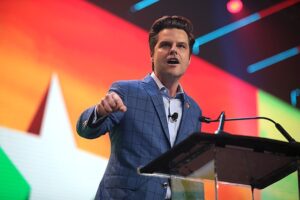
On December 16, 2025, Florida Republican gubernatorial candidate James Fishback released a campaign ad asserting that calling Israel’s actions “genocide” or labeling Israeli Prime Minister Benjamin Netanyahu a war criminal “can be convicted as antisemitism.” Fishback simultaneously stated that such criticism should be protected under the Constitution and pledged that, as governor, he would defend free speech.
In reality, criticizing Israel is fully legal in the United States and protected by the First Amendment. Antisemitism itself is not a crime under U.S. law. Violent acts or credible threats against Jews can be prosecuted under hate crime statutes, but those laws apply equally to all protected groups and do not criminalize political speech.
There is no record of anyone in the United States being arrested, charged, or convicted simply for criticizing Israel or its government. On the contrary, criticism of Israel has become increasingly mainstream across American politics, media, and culture.
Polling data reflects this shift. Surveys show that voters are more likely to support candidates who criticize Israel and less likely to support those who defend Israeli policies or favor maintaining current levels of U.S. military aid. More than two dozen congressional candidates, including three sitting members of Congress, have publicly pledged not to accept donations from pro Israel political organizations.
The trend is visible at the ballot box as well. Some commentators argue that Zohran Mamdani’s election as mayor of New York City was fueled in part by his repeated and harsh criticism of Israel, including a pledge to arrest Prime Minister Netanyahu if he were to visit the city. These statements were made openly and without legal consequence.
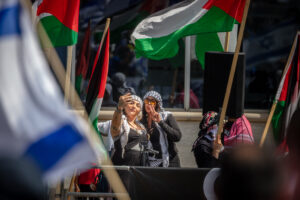
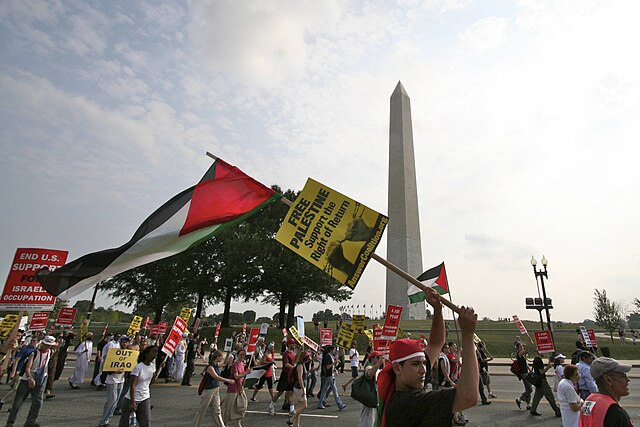
Public demonstrations further undermine the idea of a speech ban. A Harvard Kennedy School analysis documented approximately 12,400 pro Palestinian protests in the United States between October 7, 2023 and June 7, 2024, describing it as the largest sustained protest movement in American history triggered by a foreign event.
In the entertainment world, more than 1,800 actors, entertainers, and producers signed a pledge in 2025 to boycott Israeli film institutions over the Gaza war. Hundreds more signed open letters accusing Israel of “genocide.” None were arrested or prosecuted for doing so.
Ironically, some public figures report facing professional pressure not for criticizing Israel, but for refusing to adopt pro Palestinian positions. Musician Azealia Banks said she withdrew from a music festival after being pressured to issue a pro Palestine statement.
At the same time, Jewish Americans report rising hostility. At least 41 percent of Jewish students say they feel the need to hide their Jewish identity on campus, and 13 percent report withdrawing from campus or social activities due to fear of harassment or physical harm.
President Donald Trump addressed this tension directly on December 16, 2025, when he warned about growing antisemitism in Congress alongside increasing attacks on Israel. “You have to be very careful. You have a Congress in particular, which is becoming antisemitic. You have AOC plus three; you have those people. Ilhan Omar, she hates Jewish people. And you have to be very careful, because there’s been a big change,” Trump said.
Conservative commentator Charlie Kirk echoed the concern, stating, “It’s hunting season for Jews in this country right now and that’s a sick thing… You need to get tougher and you need to kind of fight through it. And look, your people are very tough. You’ve been through a lot. But it’s a sad state of affairs that that’s what America’s come to.”
The takeaway is straightforward. There is no ban on criticizing Israel in the United States. Such speech is protected by law and widely practiced. In today’s political and cultural climate, criticism of Israel often comes with social approval, while defending Israel is increasingly controversial. The claim that Americans are legally silenced on Israel collapses under even basic scrutiny.