
Israel is often accused of monopolizing regional water resources, but the reality is the opposite. Over the past several decades, Israel has transformed itself from an extremely water-scarce nation into a global provider of water solutions, technologies and even direct water supply to its neighbors. The country now produces more water than it consumes, despite the fact that more than 60 percent of its land is desert.
Today Israeli systems and expertise are used in California, Kenya, Vanuatu, India and Latin America, and are even being studied by Iran’s pro-democracy opposition. Israeli officials and experts say this transformation is not only a national success story but increasingly a lifeline for a world facing severe water shortages.
Turning Scarcity Into Abundance
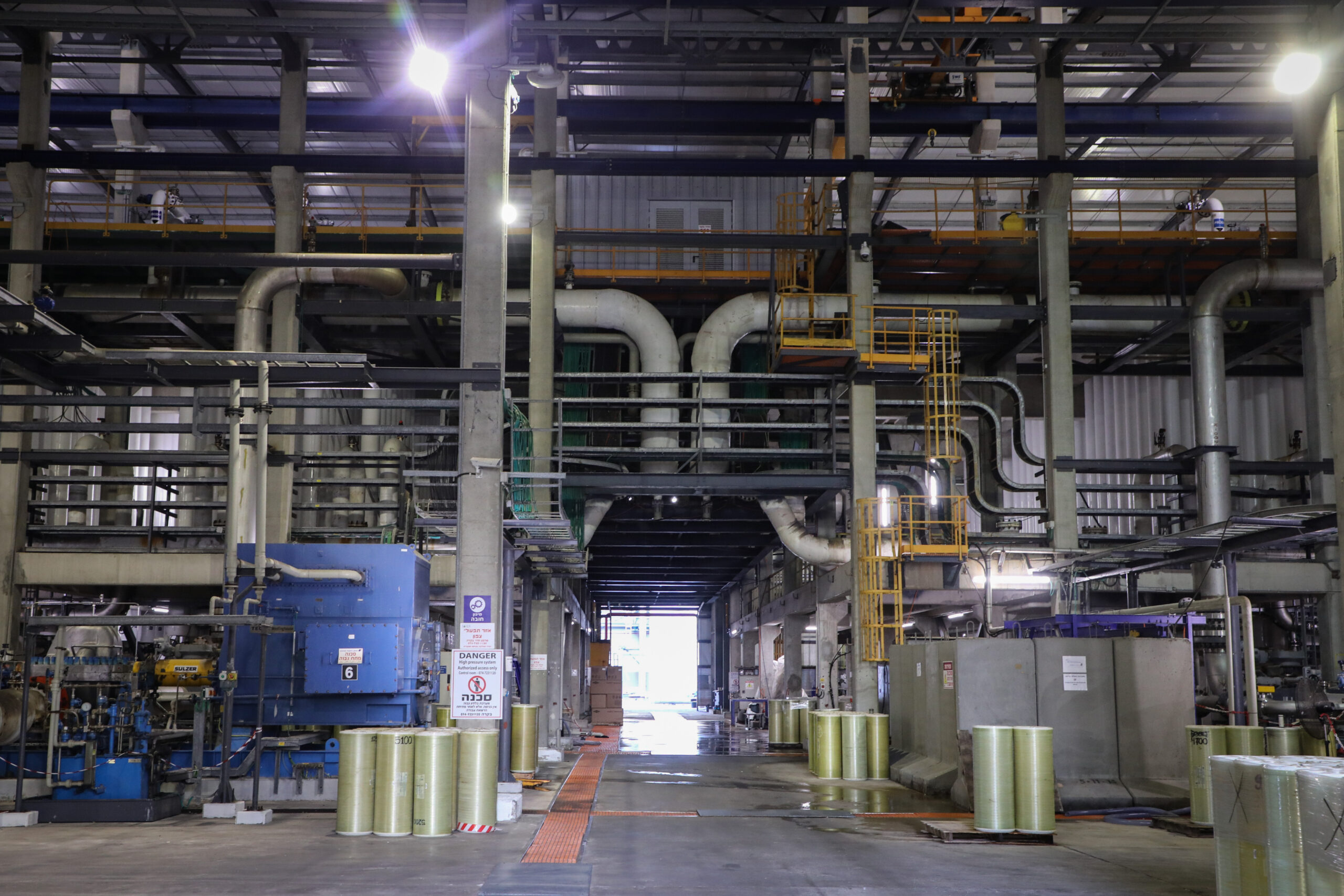
Israel’s turnaround began with innovation in desalination, wastewater reuse and precision agriculture. Facilities like the Sorek and Ashkelon desalination plants now provide up to 90 percent of Israel’s municipal water. As a result, households receive safe, reliable, on-demand water around the clock.
Seth Siegel, author of the book “Let There Be Water,” explained the scale of the achievement during a lecture: “Every country has something to learn from how Israel became water-abundant and drought-proof. Israel shows that with planning, innovation and smart management, even the driest places can secure their water future.”
Israel also recycles up to 95 percent of its wastewater, the highest rate in the world. Much of this treated water is used for agriculture, freeing up higher-quality water for homes and for neighboring regions.
Water Aid Reaching Far Beyond Israel
Humanitarian organizations and Israeli companies now export these technologies globally. Innovation: Africa uses Israeli-designed solar pumps and drip irrigation systems in seven African countries. IsraAID has installed customized filtration and clean-water systems in Fiji, Haiti, Kenya, Uganda and Myanmar.
In December 2023, the Inter-American Development Bank brought delegations from 12 Latin American and Caribbean countries to Israel to study its water governance and treatment systems. Many returned home with plans to replicate Israeli models.
Israel also provides water directly to neighbors. Siegel noted this publicly in one of his talks: “Israel provides its entire population 24/7 access to healthy, safe, on-demand water… and even sends water to Gaza every day, including during conflict.”
Clarifying the Israeli-Palestinian Water Reality
Claims that Israel denies water to Palestinians are flatly contradicted by the data. Under the 1995 Oslo Water Agreement, Israel is required to supply 31 million cubic meters of water per year to the Palestinian territories. Today it supplies roughly 50 million, far exceeding its obligations. Palestinians consume around 200 million cubic meters in total, with much of the shortfall tied to local mismanagement.
The Jewish Virtual Library documents more than 300 illegal Palestinian wells, widespread failure to treat sewage, refusal to build approved desalination plants and reliance on outdated agricultural irrigation that wastes large amounts of water.
A Stark Contrast: Iran’s Water Collapse
Israel’s success stands in sharp contrast to Iran, where years of mismanagement and corruption have driven the country toward a severe water emergency. President Masoud Pezeshkian recently warned that Iran is approaching “a situation for which no remedy can be found.” On social media, Sen. John Fetterman criticized the regime’s priorities, writing that “Iran spent billions to build a bomb instead of a water infrastructure. Their people are paying the price.”
It is no coincidence that Iran’s own opposition movement is now looking to Israel as a model. In September 2025, a delegation connected to Crown Prince Reza Pahlavi visited Israel to study its water systems and seek partnerships for rebuilding a future, post-regime Iran. Minister of Innovation Gila Gamliel, who hosted the delegation, said, “Israel is the solution to the problem. If you look at what this regime is doing, it makes the people suffer without water, with huge air pollution, with failing energy systems. We are the solution to all of this.”
A Model the World Is Already Following
Israel’s experience shows that even in the harshest climates, water abundance is achievable with a combination of policy, pricing and innovation. As global drought intensifies from North Africa to the American West, more countries are turning to Israeli expertise to secure their water futures.
The story is no longer only about Israel solving its own crisis. Increasingly, it is about Israel helping the world survive a much larger one.