Claims that Israel is an apartheid state have become a staple of anti-Israel rhetoric in activist circles and on college campuses. The charge is serious. Apartheid is defined under international law as a system of inhuman acts carried out to establish and maintain domination by one racial group over another through systematic oppression. When the facts are examined, that definition does not describe Israel.
The accusation gained traction after 1967, following Israel’s defensive victory in the Six Day War. Critics frequently point to Israel’s border controls and security checkpoints between Israel and Palestinian-controlled areas in Judea, Samaria, and Gaza as supposed evidence of racial segregation. That framing ignores a basic reality: Palestinians are not Israeli citizens and do not claim to be. They identify as a separate population with their own political institutions and elections.
Palestinians vote in Palestinian elections and are governed by Palestinian authorities. As non-citizens, they do not vote in Israeli elections. When Palestinians cross into Israel for work or visits, they are subject to border checks and security regulations. These measures are tied to security, not race. From 1993 to 2008, Palestinian terrorism included 723 suicide bombings that killed more than 1,000 Israelis. Border controls exist because of that history of violence, not because of ethnic identity.
At the same time, Israel continues to supply Palestinian-controlled areas with water, electricity, and other resources. These arrangements reflect ongoing coordination, even amid conflict, and contradict the claim that Israel seeks permanent domination or collective punishment.
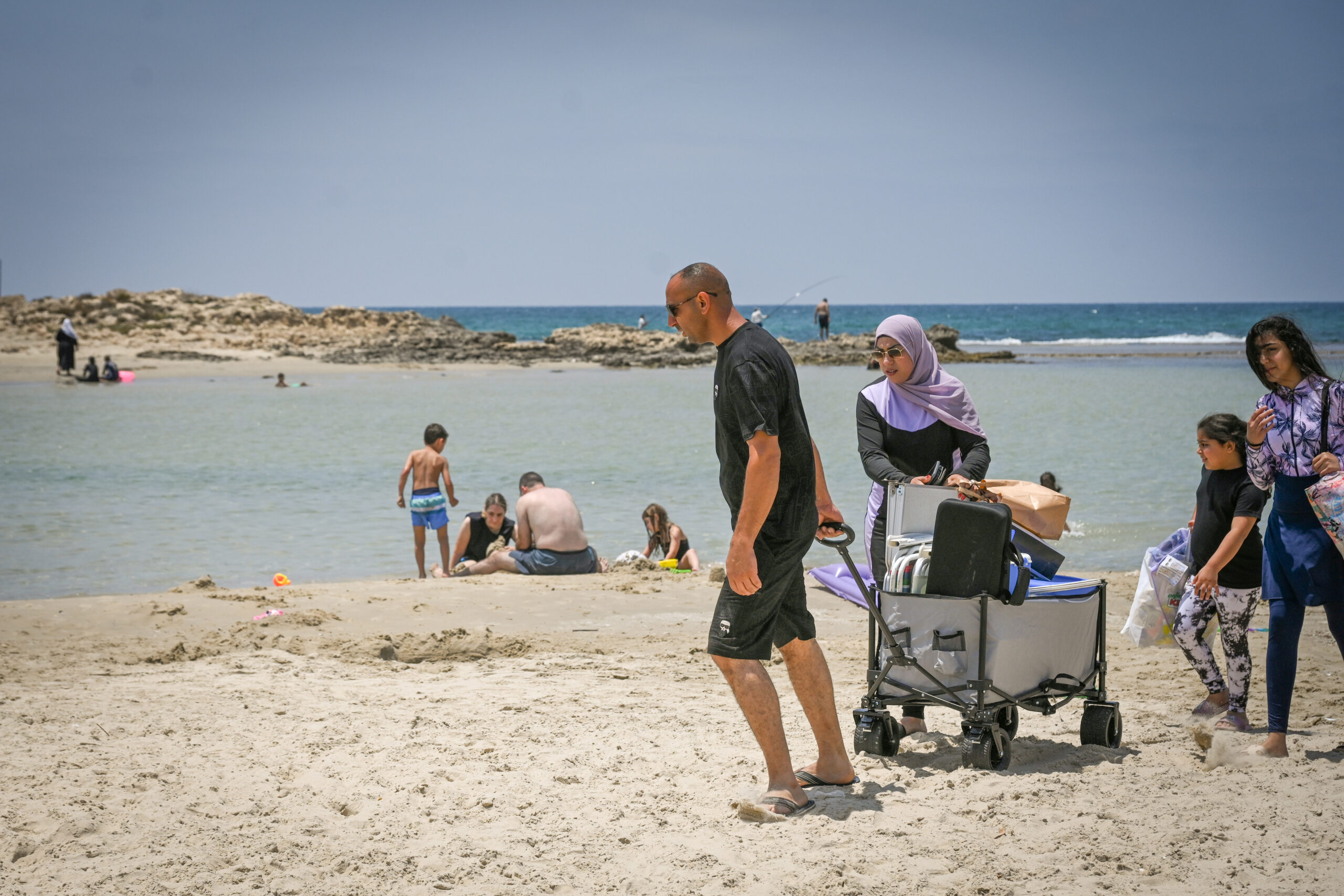
Inside Israel itself, the apartheid label collapses entirely. Arab citizens of Israel make up roughly 21 percent of the population, about 2.1 million people as of 2023. They hold full Israeli citizenship. They vote, run for office, and have access to public services. Arab political parties consistently hold between 10 and 15 seats in the Knesset, and Arab citizens serve in senior positions across Israeli society, including as Supreme Court judges and municipal leaders.
In 2021, Israel launched a five-year, $9 billion plan aimed at improving employment, healthcare, education, and infrastructure in Arab communities. Arab citizens also receive equal access to education and welfare services. While poverty exists in Arab communities, it is not unique to them. Jewish ultra-Orthodox households have higher poverty rates, underscoring that socioeconomic challenges in Israel are not driven by race.
Land policy is often misrepresented as well. About 93 percent of Israel’s land is publicly owned and managed by the Israel Land Authority, which leases land to all citizens regardless of ethnicity. Private land ownership makes up roughly 7 percent and is divided between Jewish and Arab owners. In some cases, Israeli Arabs are offered more favorable terms for residential land than Israeli Jews.
Israel’s policies are also inconsistent with any claim of racial hierarchy. Arab citizens are exempt from compulsory military service, while other minorities, such as the Druze, serve voluntarily and reach high ranks in the Israel Defense Forces. This reflects a system based on citizenship and security considerations, not racial exclusion.
Israel’s actions toward Palestinians further undermine the apartheid narrative. The country withdrew entirely from Gaza in 2005 and has made repeated peace offers, including proposals at Camp David in 2000 that would have transferred 91 to 95 percent of the West Bank to Palestinian control. These moves demonstrate a willingness to relinquish territory, not entrench permanent domination. Israel continues to condition its security measures on the behavior of groups like Hamas that openly reject Israel’s existence.
As Arab singer Valerie Hamaty put it, “How is Israel an apartheid state if I am on Israel’s biggest TV show, singing in Hebrew and Arabic? I’m Israeli, and we love each other.”
Conservative commentator Charlie Kirk has drawn a sharp contrast between Israel’s democratic system and its enemies, saying, “You have one side that has a democratically elected government that allows pluralism in the Knesset: Arabs and Jews. In Gaza, they are one size fits all. Hamas was voted into power, and the stated doctrine of Hamas is no morally different than Nazism. It’s not an exaggeration. It’s not about land. It’s not about winning hearts or souls. It’s about killing Jews.”
Israel is a diverse democracy that grants full civil and political rights to its Arab citizens, provides equal access to public services and land, and enforces security measures based on national defense rather than race. The facts show that calling Israel an apartheid state is not an honest description of reality.