Images of American lawmakers visiting Jerusalem have once again sparked online outrage, with critics claiming that U.S. officials who pray at the Western Wall are displaying greater loyalty to Israel than to the United States. The accusation, amplified by social media influencers and political commentators, is not only misleading but rooted in a fundamental misunderstanding of Christian history and Scripture.
American politicians visit the Western Wall not because it is exclusively Jewish, but because it is one of the most biblically significant sites in Christianity.
The Viral Claim: Reverence Equals Foreign Allegiance
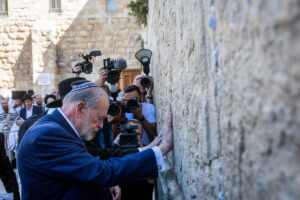
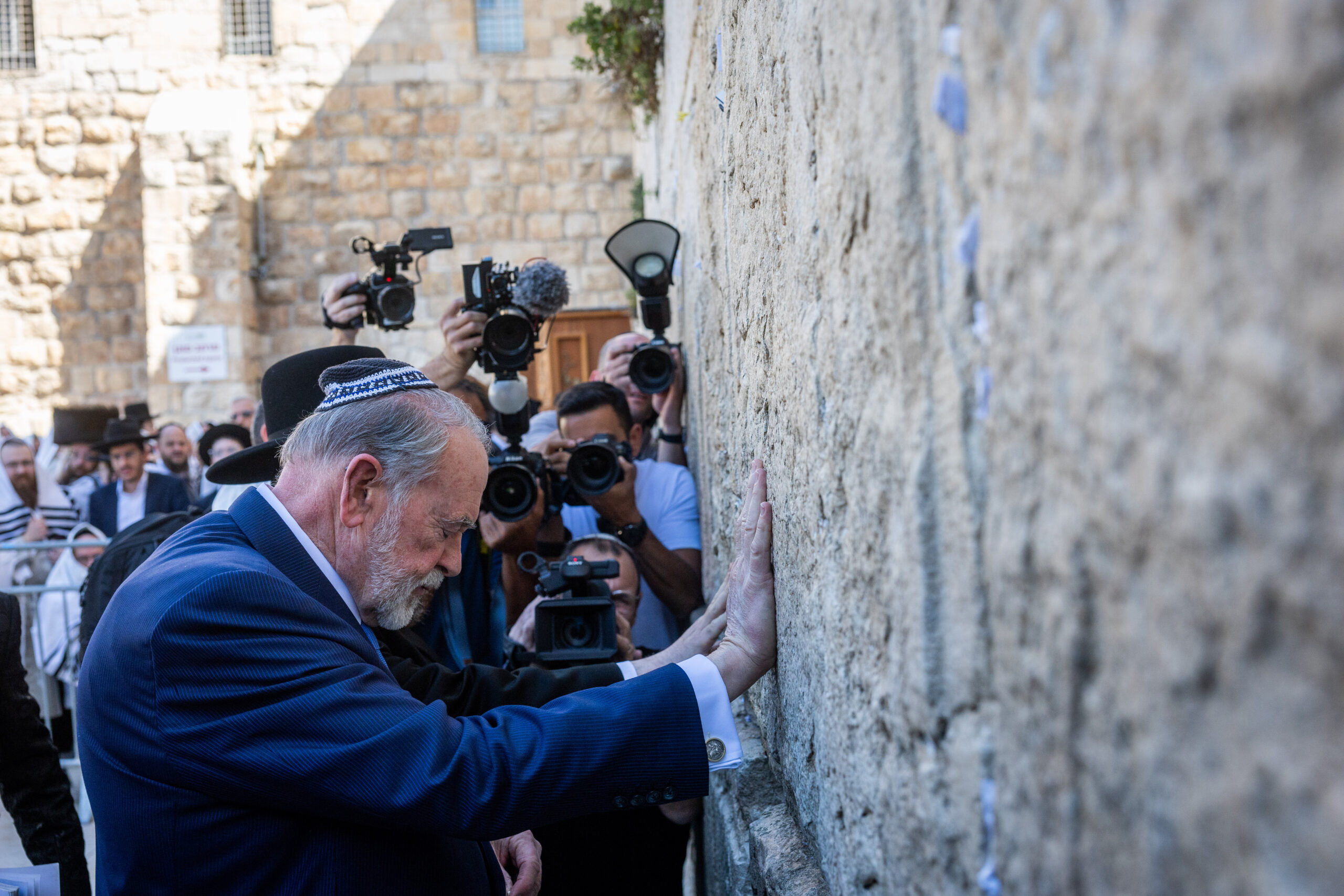
In 2025, several U.S. lawmakers and senior officials traveled to Jerusalem, visiting major Christian holy sites, including the Western Wall, also known as the Wailing Wall. As is customary, they wore kippot while praying at the site. Photos from the visit circulated widely online, with critics accusing the officials of being “Israel First” and questioning their loyalty to America.
On December 20, 2025, Darryl Cooper, a Nazi apologist and associate of Tucker Carlson, mocked the lawmakers for “interrupting their duties to kiss an old wall in Jerusalem.” The remark echoed a broader narrative portraying reverence at the Wall as political subservience rather than religious observance.
What the Western Wall Actually Is
The Western Wall is the last remaining retaining wall of the Second Temple, the holiest site in Judaism during the time of Jesus. The Second Temple stood on the same location as the First Temple built by King Solomon, which Scripture describes as being filled with the glory of God.
For Christians, this is not a marginal or symbolic location. It is a central setting of the Gospel narrative.
Jesus Worshiped at the Temple on This Site
The New Testament records that Jesus visited, taught, and worshiped at the Second Temple, which he explicitly called “my Father’s house.” He was brought there as an infant when Mary and Joseph presented him to the priests, encountering Simeon and the prophetess Anna at the Nicanor Gate within the Temple complex.
As a child, Jesus remained at the Temple, astonishing the teachers with his understanding, an episode that took place within the same sacred precinct. Throughout his ministry, Jesus taught daily at the Temple, drawing crowds who came specifically to hear him there.
The Western Wall and Key Events in Jesus’s Ministry
Several pivotal moments in the life of Jesus are directly tied to the Temple complex connected to the Western Wall. Jesus drove the money changers from the Temple, an event that occurred in the Royal Portico, a structure associated with the Wall itself. He taught at Solomon’s Porch, another part of the Temple complex, addressing listeners in the very heart of Jewish worship.
Opposite the Western Wall lies the area traditionally identified as the pinnacle of the Temple, where Satan tempted Jesus during his forty days in the wilderness. These are not peripheral traditions but core Gospel accounts tied to the physical geography of Jerusalem.
The Earliest Christians Worshiped There Too
After the crucifixion and resurrection, the apostles and the earliest Christian community continued to meet and worship at the Temple. The Book of Acts records that believers gathered there daily, and that Peter and John went up to the Temple regularly for prayer.
Christian worship at the Temple did not end with Jesus’s death. It was foundational to the earliest Church.
The Temple’s Theological Significance for Christians
Jesus’s declaration, “Destroy this temple, and in three days I will raise it up,” directly linked the physical Temple site to his death and resurrection. Scripture also describes God’s eyes and ears as attentive to prayers offered at the Temple, a promise many Christians continue to associate with the location even after the Temple’s destruction.
Christian reverence for the Western Wall is therefore not a political statement. It is a continuation of biblical faith rooted in Scripture.
Wearing a Kippah Is Respect, Not Submission
When visiting the Western Wall, non-Jewish visitors customarily wear a head covering as a sign of respect for the sanctity of the site. This is no different from removing shoes in certain churches or dressing modestly in religious settings.
As commentator Charlie Kirk stated, he wore a yarmulke at the Wall “out of adoration and respect.” Catholic priest Father Raymond J. de Souza has likewise affirmed that the retaining wall of the Temple Mount remains holy and that the site was holy for Jesus himself.
Mockery Reflects Ignorance, Not Insight
Jewish tradition teaches that the Divine Presence never departed from the Western Wall, a belief reflected in classical sources such as the Zohar. Christianity, while distinct, shares deep theological and historical roots in the same sacred geography.
Mocking reverence at the Western Wall is therefore not simply an attack on Israel. It is an attack on Christianity and on the biblical foundations of the faith itself.
The Reality Behind the Outrage
Portraying Christian devotion at one of Christianity’s most significant biblical sites as evidence of “foreign allegiance” does not expose corruption or misplaced loyalty. It exposes historical illiteracy and open contempt for Christian belief.
For American politicians who are Christians, visiting and praying at the Western Wall is not an act of politics. It is an act of faith, rooted in Scripture, history, and the life of Jesus himself.