
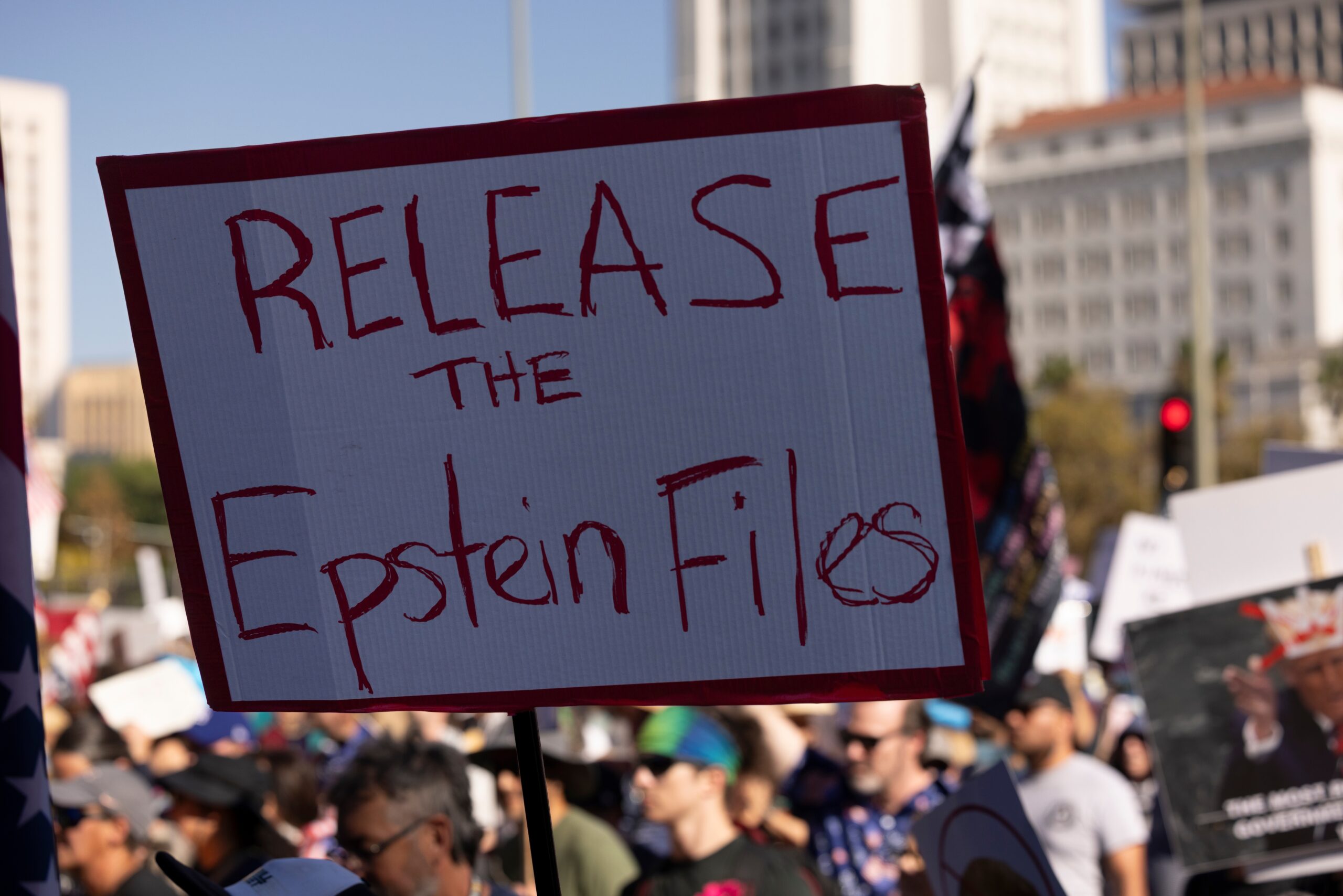
Claims circulating online that Israel pressured President Trump to block the release of the Jeffrey Epstein files are not supported by the facts. Despite viral insinuations and suggestive graphics, the public record tells a very different story—one in which President Trump repeatedly pushed for transparency, while warnings about the files centered on protecting innocent people and keeping the administration focused on its agenda, not on foreign pressure from Israel.
Where the Claim Came From
On November 15, 2025, Rep. Marjorie Taylor Greene posted on X asking “who and what country is putting so much pressure” on President Trump to stop the release of all Epstein-related files. The post included a graphic referencing AIPAC, clearly implying Israeli involvement.
The following day, speaking on CNN, Greene went further. She suggested that “recent” information showed Epstein “working with Israel,” pointing to Epstein’s connections with former Israeli Prime Minister Ehud Barak and implying a link to Israeli intelligence agencies. She then posed the question directly: Was Jeffrey Epstein working for Israel?
What the Record Actually Shows
President Donald Trump has repeatedly called for the release of the Epstein files. On November 16, 2025, he urged House Republicans to support a vote compelling the Department of Justice to release all remaining Epstein-related documents. His administration has stated that roughly 50,000 pages connected to Epstein were already released.
Trump’s public comments make clear that his hesitation about releasing everything at once had nothing to do with Israel—or any foreign government. Instead, he cited two consistent concerns: avoiding reputational harm to innocent people whose names might appear in business or social records, and preventing a political and media frenzy from derailing his policy priorities.
As Trump put it bluntly, “No matter what we give, it’s never enough.”
Epstein’s International Connections
Epstein’s relationships were not limited to Israel. He maintained ties with political and business figures across the United States, the United Kingdom, France, Norway, Russia, Saudi Arabia, and other countries. Yet none of those governments have been accused of pressuring Trump to suppress the files.
Epstein’s acknowledged relationship with Ehud Barak was public and undisputed. After Epstein’s 2019 arrest, Barak confirmed that he had worked with Epstein professionally and that Epstein had helped connect him with international business contacts, some of whom were involved in dealings with the Israeli government. These connections were documented and openly discussed—not hidden.
Crucially, the existence of professional or social ties is not evidence of an intelligence operation, let alone a state-directed blackmail scheme.
No Evidence of an Israeli Intelligence Operation
There is no evidence that Epstein ran a blackmail ring on behalf of Israel. In July 2025, former Israeli Prime Minister Naftali Bennett flatly rejected the claim, calling accusations that Epstein worked for Israel or Mossad “categorically and totally false.”
U.S. intelligence analyst Mike Benz separately concluded that Epstein functioned as a private intermediary moving through elite personal networks involving multiple countries. According to that assessment, Epstein was not operating as an intelligence agent running a coordinated blackmail campaign for any state.
The Political Context Often Ignored
Notably, Greene has not alleged that Democrats—many of whom Trump himself has identified as Epstein’s closest political associates—pressured him to block the files. Trump has repeatedly emphasized that Epstein’s inner circle leaned heavily Democratic and that accusations tied to Epstein have posed greater political risk to American, British, and European elites than to Israeli officials.
As Trump said on November 17, 2025: “All of his friends were Democrats.”
The Bottom Line
There is no evidence that Israel pressured President Trump to block the release of the Epstein files. The documented facts show the opposite: Trump called for disclosure, released tens of thousands of pages, and encouraged Congress to force the DOJ to act. His stated concerns were about protecting innocent people and keeping the administration focused—not shielding Israel.
Claims of an Epstein–Israel conspiracy do not align with the public record, Trump’s own statements, or the distribution of political risk surrounding Epstein’s network. For a movement built on skepticism of elite narratives, the evidence here points to one conclusion: this conspiracy theory doesn’t hold up.